
A wallet can show a transaction as “successful” and still leave the user worse off. That is the counterintuitive reality of DeFi: execution is not the same as safety, and a clean-looking interface is not the same as a clear understanding of what a smart contract will do. For a US user moving between Ethereum, layer-2 networks, and other EVM chains, the difficult part is rarely clicking “Confirm.” It is interpreting a chain-specific, contract-driven action before it becomes irreversible.
Consider a familiar case. An investor connects a wallet to a decentralized exchange, swaps one token for another, approves a spending limit, and later deposits the asset into a lending market. Each step may look routine. Yet the economic result depends on allowances, token behavior, routing, slippage, gas, contract state, and the possibility that the website or interaction is not what it appears to be. dApp integration, transaction simulation, and portfolio tracking address different parts of this problem. Together, they can turn a wallet from a key-storage tool into a decision-support system—but only if their boundaries are understood.
The first myth: a wallet merely sends transactions
The old mental model is simple: a wallet stores private keys, connects to websites, and broadcasts signed messages. That description is technically useful but practically incomplete. In modern EVM-based DeFi, the wallet is also the final checkpoint between a user’s intention and a contract’s interpretation of that intention.
A decentralized application, or dApp, is usually a web interface connected to smart contracts. The interface may say “Deposit,” while the underlying transaction calls a contract method with parameters such as an asset address, amount, recipient, referral code, or permit. The wallet does not automatically know whether the user’s plain-language intention matches every parameter. A strong integration therefore needs to translate contract-level data into a human-readable explanation without pretending that translation is perfect.
This is where chain support matters. Ethereum and EVM-compatible networks share broad technical conventions, but they do not share identical fee markets, liquidity conditions, token deployments, bridge assumptions, or contract risk. A token with the same ticker can have different addresses on different chains. Portfolio and transaction tools that collapse these distinctions into one balance can create a false sense of continuity.
Transaction simulation is a preview, not a crystal ball
Transaction simulation attempts to execute a proposed transaction against an available representation of current blockchain state before the user signs it. The result can reveal expected token movements, approvals, balance changes, contract errors, and other effects that are easy to miss in raw calldata.
That makes simulation more than a convenience feature. It changes the question from “Do I recognize this website?” to “What does this proposed action appear likely to do?” The distinction is important. A legitimate dApp can construct a harmful transaction through a compromised front end, a malicious contract upgrade, an incorrect network selection, or a parameter the user did not notice. Conversely, an unfamiliar dApp may construct a technically ordinary transaction. Reputation is relevant, but it is not a substitute for inspecting the action.
Simulation is especially valuable for approvals. An approval may not transfer tokens immediately, yet it can grant a contract the ability to spend them later. The practical risk is therefore not limited to the current transaction. It may concern the future authority created by the transaction. Users should distinguish between a one-time, narrowly scoped permission and a broad allowance that remains active until revoked.
Still, simulation has a hard boundary: it is conditional on the state and assumptions available when the preview is produced. DeFi state can change between simulation and mining. A liquidity pool may move, a block may be reordered, an oracle value may update, or a contract may behave differently under a changed execution context. A successful simulation does not certify a protocol, guarantee a favorable price, or prove that an economic strategy is sound.
This limitation is not a reason to dismiss simulation. It is a reason to interpret it correctly. The useful mental model is a pre-flight check, not an insurance policy. A pre-flight check can catch a disconnected engine or an unexpected cargo load; it cannot eliminate every risk in the journey.
Portfolio tracking is a state problem, not a balance display
Portfolio tracking appears simpler than transaction analysis because it is retrospective. The wallet reads balances and presents a total value. But a serious multi-chain portfolio is not just a list of numbers. It is a changing state composed of wallet balances, deposited positions, liquidity-provider claims, debt, staking receipts, vesting rights, collectibles, pending rewards, and sometimes assets whose prices are uncertain or difficult to source.
This creates a common misconception: that a larger portfolio number necessarily means a better financial position. In reality, valuation and liquidity are different properties. A position may be marked at a market price while having substantial price impact if sold. A lending position may show collateral value while carrying liquidation risk. A bridged asset may be economically familiar but operationally dependent on a bridge system. A token balance may be visible while its contract permissions remain dangerously broad.
For DeFi users, tracking is most useful when it preserves relationships. The question is not only “How many dollars do I hold?” but also “Which assets are collateral, which are liabilities, which depend on a protocol, and which can be moved without another permission or claim?” That is why transaction history and portfolio state should be read together. A portfolio tracker tells you what appears to exist; transaction simulation helps explain what a new action may change.
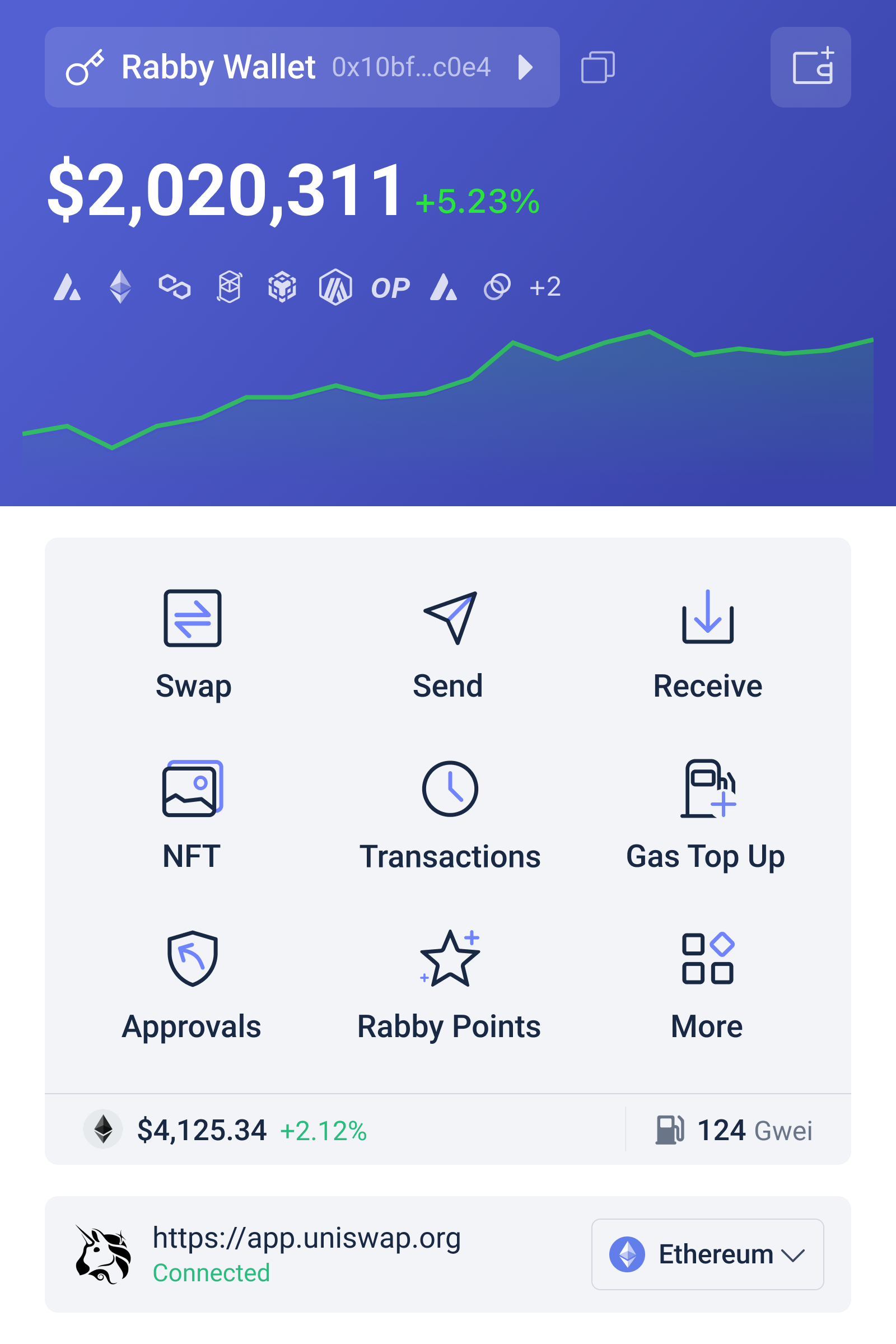
In this context, an advanced EVM wallet can serve as a practical control panel across networks. Users evaluating the current Rabby Wallet experience can learn more here, particularly if they want a wallet designed around chain-aware interaction, transaction previews, and broader on-chain visibility. The useful question is not whether a wallet promises security in the abstract, but which risks it helps surface before signing and which risks remain the user’s responsibility.
A case study in ordinary DeFi complexity
Imagine a user in California moving stablecoins from an Ethereum wallet into a lending protocol on an EVM-compatible network. The sequence may involve switching networks, approving a token, depositing funds, and later borrowing against the position. At each point, different checks matter.
First, the wallet should make the active chain and contract addresses legible. Network confusion is mundane but consequential: the same symbol may refer to different contracts, and a user may be looking at an asset that cannot be used in the intended market. Next, simulation should clarify whether the action changes a balance, creates an allowance, deposits collateral, or generates debt. Finally, portfolio tracking should represent the deposited position and the liability together rather than showing only the gross asset value.
The deeper lesson is that security is compositional. No single warning catches every failure mode. A simulation may flag an unexpected recipient but not explain protocol insolvency. A portfolio view may show a position accurately but not judge whether its oracle is robust. dApp integration may make a protocol easy to use while also reducing the friction that might otherwise prompt a user to investigate. Convenience and safety can reinforce each other, but they can also conflict.
What the tools can and cannot tell you
There are three layers of judgment. The first is mechanical: what calls are being made, what assets are moving, and what permissions are changing? Transaction simulation is strongest here. The second is contextual: is the contract address the intended one, is the network correct, and does the action fit the user’s plan? Wallet warnings and portfolio context help here. The third is economic and institutional: is the protocol solvent, are its incentives sustainable, and what happens during a market shock? No wallet interface can fully answer these questions on the user’s behalf.
This distinction matters because users often ask security tools to provide a verdict when they can realistically provide evidence. A warning is not proof of fraud, and an absence of a warning is not proof of safety. Risk systems typically rely on available chain data, contract interpretation, known patterns, and simulation conditions. Novel exploits, deceptive interfaces, governance changes, and off-chain failures may remain outside their view.
A reusable decision framework is therefore modest but effective: identify the action, identify the authority granted, identify the assets exposed, and identify what would happen if the protocol or market moved against you. If the answer to any of these is unclear, pause before signing. This is slower than treating every confirmation as a routine click, but often faster than reconstructing losses after the fact.
What to watch as wallets become more analytical
Recent messaging around Rabby Wallet emphasizes Ethereum and EVM coverage, multi-chain use, security, and access through common desktop browsers. The important implication is not that a wallet can remove DeFi risk. It is that the wallet layer is becoming a more active interpretive surface for on-chain activity.
If this direction continues, the most valuable improvements will likely be contextual rather than merely visual: clearer separation of approvals from transfers, better treatment of debt and collateral, more explicit cross-chain identity, and explanations that connect a transaction to its likely portfolio consequences. The difficult research and design problem is reducing complexity without hiding uncertainty. A warning that says “safe” is easy to understand but potentially misleading; a warning that explains every caveat may be accurate but unusable.
For users, the near-term signal to watch is whether wallet features help them ask better questions. Can the interface show not just the expected token output, but also the permission created? Can it distinguish a temporary balance change from a durable protocol position? Can it make stale, illiquid, or chain-dependent valuations visible? Those capabilities would improve decision quality even without predicting markets.
Frequently asked questions
Does transaction simulation guarantee that a DeFi transaction is safe?
No. Simulation can reveal likely execution effects under particular conditions, including transfers, approvals, and contract errors. It cannot guarantee that a protocol is solvent, that market prices will remain stable, or that nothing changes between simulation and confirmation.
Why does portfolio tracking need to show more than token balances?
Because DeFi positions often include obligations and dependencies. Collateral, borrowed assets, liquidity positions, staking claims, and bridge exposure can materially change risk even when the headline portfolio value looks attractive.
What should I check before signing an unfamiliar dApp transaction?
Check the active network, contract identity where available, assets leaving the wallet, assets expected in return, permissions granted, and whether the action creates debt or locks funds. If the simulation or explanation conflicts with your intention, do not sign until the discrepancy is resolved.
The most useful shift in mindset is simple: a wallet is not only where a transaction is authorized; it is where an intention is tested against blockchain mechanics. dApp integration can reduce friction, simulation can expose expected effects, and portfolio tracking can reveal the broader financial state. None replaces judgment. Used together, however, they make the crucial moment before signing more legible—and in DeFi, that moment often matters more than the confirmation that follows.